Understanding the Air Die Grinder: Types and Core Capabilities
A pneumatic die grinder is a compressed air powered rotary tool that accepts a wide variety of small diameter accessory bits in its collet, typically in 1/4 inch or 1/8 inch shank sizes. The tool body is designed for one handed use with the tool held like a pen or overhand depending on the task, and the spindle extends from one end of the cylindrical body in a straight line or at a right angle depending on the tool configuration. The air motor inside is simple, durable, and capable of sustained high speed operation that would overheat an equivalent electric motor if run continuously for the same duration.
Most standard air die grinders operate at free speeds between 18,000 and 30,000 RPM, with the actual working speed dropping under load depending on the material being worked and the size and type of accessory being used. This speed range is suitable for carbide burrs, mounted grinding stones, rubber bonded abrasive points, sanding drums, and polishing bobs across the full range of die grinder applications in metalworking, mold making, automotive finishing, and general fabrication.
High Speed Air Die Grinder
High speed air die grinders are optimized for applications where maximum spindle speed is the primary requirement. These tools typically operate at 25,000 to 30,000 RPM or higher at free speed, and they are the correct choice for fine deburring with small diameter carbide burrs, precision port work in cylinder heads and intake manifolds, and detail work in mold cavities where the small contact area of the tool tip requires high rotational speed to achieve adequate surface speed for efficient material removal.
The air consumption of high speed grinders is typically higher than standard or low speed models, often in the range of 4 to 6 cubic feet per minute at working load. This air consumption requirement determines the compressor specification needed to sustain continuous high speed die grinder operation without pressure drop that would cause the tool to lose speed progressively through a work session. A compressor with a minimum 60 gallon tank capacity and a rated delivery of at least 5 CFM at 90 PSI is the practical minimum for sustained high speed air die grinder use without frequent pauses to allow the compressor to recover pressure.
Low Speed Air Die Grinder
Low speed air die grinders operate in the range of 5,000 to 15,000 RPM and serve a distinctly different set of applications from their high speed counterparts. The lower speed range is appropriate for larger diameter accessories, including mounted flap wheels, 2 to 3 inch diameter rubber bonded abrasive drums, felt polishing bobs used with polishing compounds, and wire brush attachments where the higher speed of a standard grinder would cause the accessory to wear prematurely or create a surface finish that is too aggressive for the application.
In automotive bodywork preparation and metal polishing, low speed air die grinders are used for applying and working polishing compounds on curved surfaces, blending welds in panel work, and finishing aluminum surfaces with progressively finer abrasive grades. The reduced speed at the contact point reduces heat generation in heat sensitive materials and allows better control of the surface finish progression through coarse to fine abrasive sequences. For polishing soft metals such as aluminum and copper, a maximum working speed of 8,000 to 10,000 RPM prevents the heat induced surface smearing that occurs when polishing compounds are worked too fast for the metal's thermal properties.
Lengthen Air Die Grinder
The lengthen air die grinder, also called an extended reach or long nose die grinder, addresses one of the fundamental access limitations of the standard die grinder configuration. Standard die grinders have a body length of approximately 15 to 20 centimeters from the inlet fitting to the collet face. When working in deep cavities, long pipe sections, large mold pockets, or structural members where the work surface is recessed significantly deeper than this distance from the access opening, the standard tool body contacts the edges of the cavity before the working tip can reach the target surface.
Lengthen air die grinders extend the spindle nose ahead of the main tool body by 100 to 300 millimeters or more, allowing the working tip to reach into spaces that would be inaccessible to a standard configuration tool. The extended nose section is typically a straight tube that carries the spindle shaft, with the collet at the far end and the body containing the air motor remaining at the operator's hand position. This configuration maintains normal tool handling while extending working reach dramatically.
Applications for lengthen air die grinders include deburring and finishing the interior of tube weldments, porting work deep inside engine blocks, finishing the interior surfaces of fabricated tanks and vessels, and detail work in the deep pockets of large injection molds where standard tools cannot reach the floor of the cavity without their body contacting the cavity walls. The practical working reach of a lengthen die grinder is 30 to 50 centimeters deeper than an equivalent standard tool, opening access to a range of internal surface finishing tasks that would otherwise require specialized tooling or manual abrasive work.
Straight vs Angle Configuration
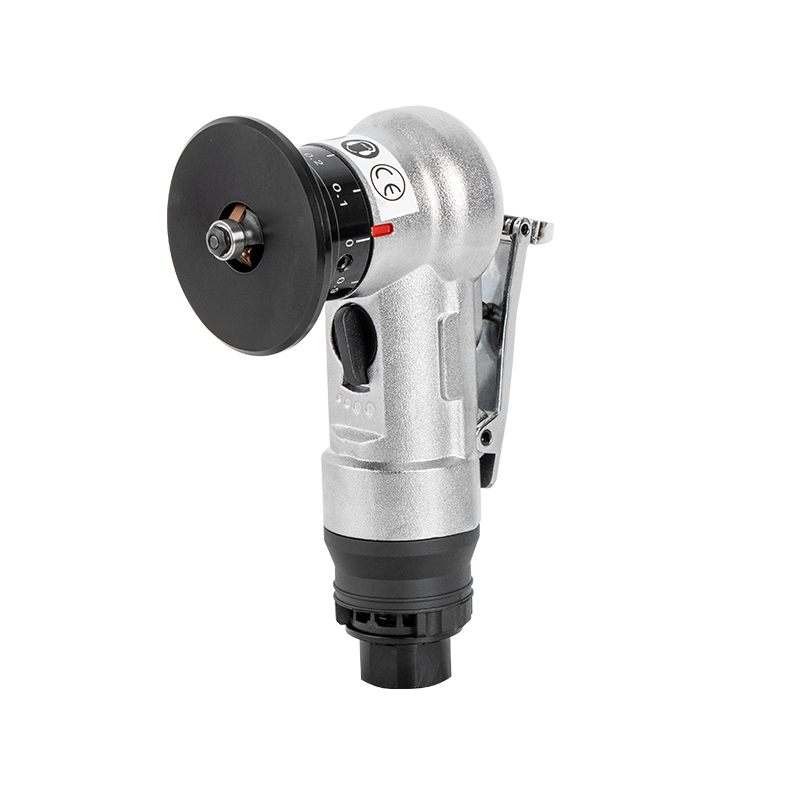
Beyond the speed and reach variations described above, air die grinders are produced in two fundamental body configurations: straight (inline) and angle (right angle). In the straight configuration, the spindle axis is aligned with the body axis, creating a pencil like form that offers the best reach into narrow openings and the most direct force transfer from the operator's hand to the work surface. In the angle configuration, the spindle is oriented at 90 degrees to the body, creating an L shaped profile that is more ergonomic for work on flat surfaces and allows the full tool length to remain parallel to and close to the work surface during use.
Right angle die grinders use bevel or spiral bevel gearing to transmit the air motor's power through the 90 degree change of direction to the spindle, and this gear set introduces a small amount of gear noise and a modest reduction in speed compared to a straight grinder with an equivalent air motor. The trade off is the ergonomic and reach advantage for flush surface work. Most professional workshops maintain both configurations, using the straight tool for cavity and port work and the angle configuration for flat surface blending, edge conditioning, and finishing operations.
Air Die Grinder vs Electric Die Grinder: Which Is Better
The comparison between air die grinders and electric die grinders is not a contest with a single correct answer but a question of fit between tool characteristics and the specific demands of the working environment. Both power sources deliver the rotary motion that die grinder accessories require, but they deliver it with different performance profiles, different strengths, and different practical limitations. Understanding these differences clearly allows a rational decision based on actual workshop conditions rather than brand preference or received wisdom.
Performance and Speed
Air die grinders consistently achieve higher free speeds than electric die grinders at equivalent price points and tool sizes. The air motor's simple vane design has no commutator or coil windings to limit rotational speed, and a well made vane motor can sustain 25,000 to 30,000 RPM under working load with minimal heat buildup in the motor itself. The heat generated during operation is carried away by the exhaust air stream, which cools the motor continuously during use, allowing extended working periods without the thermal protection shutdowns that limit corded electric die grinders during sustained use.
Electric die grinders, whether corded or battery powered, generate heat in their motor windings during use, and thermal management limits the sustained duty cycle of most consumer and professional grade electric die grinders. A premium corded electric die grinder can typically sustain continuous operation for 15 to 20 minutes before requiring a cooling pause, while a comparable air grinder can run continuously for as long as the air supply is maintained without any thermal limitation. For production environments where continuous operation is the norm rather than the exception, this duty cycle difference is a significant productivity factor.
Power to Weight Ratio
Air die grinders deliver exceptional power relative to their weight. A typical 1/4 inch collet air die grinder producing 0.3 to 0.5 horsepower weighs 400 to 700 grams, while an equivalent output corded electric die grinder weighs 900 grams to 1.5 kilograms due to the heavier motor assembly required to achieve the same output. Over a long working session, this weight difference accumulates into significant operator fatigue reduction, and for precision work where tool control is paramount, the lighter air tool provides better tip control and reduced hand tremor during fine detail passes.
Battery powered electric die grinders have improved dramatically in recent years, with 18 volt and 20 volt lithium ion platforms now offering competitive power output in compact packages. However, battery weight partially offsets the advantage of the compact motor, and battery runtime remains a practical constraint for sustained production use. A fully charged 18 volt, 5.0 Ah battery provides approximately 20 to 35 minutes of die grinder operation under moderate load, which is adequate for many tasks but requires either battery swapping or charging breaks in longer work sessions.
Infrastructure Requirements and Cost
The significant practical disadvantage of the air die grinder is the infrastructure requirement of a compressed air supply. A quality air compressor, the air lines to distribute compressed air through the workspace, and the fittings, regulators, and filters required for clean, dry, regulated air represent a substantial upfront investment that is not required for electric die grinders. For a workshop that is already equipped with a compressed air system for other pneumatic tools, adding an air die grinder requires only the tool purchase. For a workshop without compressed air infrastructure, the full system cost must be included in the comparison.
Electric die grinders, by contrast, require only a power outlet, making them immediately usable in any location with electrical access including job sites, remote locations, and temporary workspaces where running a compressor and air line is impractical. The cordless battery platform extends this accessibility further, eliminating even the power outlet requirement for short duration tasks.
Summary Comparison
| Factor |
Air Die Grinder |
Corded Electric Die Grinder |
Battery Die Grinder |
| Typical Free Speed |
18,000 to 30,000 RPM |
25,000 to 35,000 RPM |
20,000 to 30,000 RPM |
| Sustained Duty Cycle |
Continuous (with air supply) |
15 to 20 min before cooling |
20 to 35 min per charge |
| Typical Tool Weight |
400 to 700 g |
900 g to 1.5 kg |
700 g to 1.2 kg (with battery) |
| Infrastructure Needed |
Compressed air system |
Power outlet only |
Battery charger only |
| Variable Speed |
Throttle lever (some models) |
Electronic dial control |
Electronic dial control |
| Best Environment |
Fixed workshops, production |
Shops, job sites with power |
Remote, mobile, job site |
| Relative Tool Cost |
Low to medium |
Medium |
Medium to high |
Air Die Grinder vs Angle Grinder for Metal Finishing
The question of whether to use an air die grinder or an angle grinder for metal finishing is frequently asked and frequently answered incorrectly. These two tools are not competing alternatives for the same tasks but rather complementary instruments for different phases and types of metalworking and surface finishing work. Understanding where each excels prevents both the frustration of trying to use the wrong tool for a task and the productivity loss of using a capable but inappropriate tool when a better matched alternative is available.
What the Angle Grinder Does Best
The angle grinder is optimized for high material removal rate tasks on accessible, relatively flat surfaces using large diameter abrasive wheels and flap discs. A standard 4.5 inch angle grinder spinning a Type 27 grinding wheel at 11,000 to 12,000 RPM removes metal at a rate that a die grinder cannot approach, making it the correct tool for grinding down weld beads on plate steel, removing rust from large flat areas, cutting through bolts and rod, and conditioning the surface of structural steel before welding or coating.
A 4.5 inch angle grinder with a 40 grit flap disc removes approximately 3 to 5 times more metal per unit time than an air die grinder with a 1/2 inch diameter flap wheel, making the angle grinder the rational choice wherever the work surface is accessible to the larger tool and the quantity of material to be removed justifies the higher removal rate.
The limitations of the angle grinder in metal finishing work are equally important to understand. The minimum wheel diameter of 4 to 4.5 inches creates a minimum radius of curvature below which the wheel cannot conform to the work surface, preventing its use in tight inside corners, small radius fillets, and any recessed area smaller than the wheel diameter. The tool's weight and size also make sustained precision work fatiguing and limit feedback to the operator during fine finishing passes.
What the Air Die Grinder Does Best
The air die grinder fills the precision and access role that the angle grinder cannot serve. Its small accessory diameter allows work in tight inside corners, small fillet radii, and recessed cavities, while its high speed and light touch make it the appropriate tool for controlled material removal in situations where the angle grinder's aggressive stock removal rate would result in removal of too much material or damage to adjacent surfaces. In mold and die work, cylinder head porting, jewelry fabrication, and automotive restoration, the die grinder's precision and access capability is irreplaceable.
For final finishing and polishing, the die grinder with appropriate accessories, specifically felt bobs, rubber bonded abrasive points, and small diameter polishing pads, achieves surface finishes on metal that no angle grinder configuration can match. The controlled speed, small contact area, and ability to work abrasive sequences from coarse to ultra fine in the same tool without tool changes makes the die grinder the preferred finishing tool for any surface where final appearance or dimensional precision is a primary concern.
The Practical Workflow for Metal Finishing
Professional metal finishers do not choose between the angle grinder and the die grinder; they use both in sequence. The typical workflow for finishing a welded fabrication to a smooth, polished surface proceeds through the following logical stages:
- Coarse weld removal with angle grinder: Use a 4.5 or 5 inch angle grinder with a Type 27 grinding wheel to remove the bulk of the weld bead until the weld face is approximately 0.5 to 1 mm above the surrounding base metal. This phase removes the largest volume of material in the shortest time using the tool best suited to aggressive stock removal.
- Intermediate blending with angle grinder flap disc: Switch to a 60 or 80 grit flap disc to blend the remaining weld crown into the surrounding base metal and remove the deep scratches left by the grinding wheel. The flap disc conforms better to the surface than a rigid grinding wheel, producing a more consistent depth of cut across the blend area.
- Tight area and corner work with die grinder: Use the air die grinder with mounted stones or carbide burrs to address the weld toes, inside corners, and any areas inaccessible to the angle grinder. At this stage, the die grinder removes the last traces of the weld at the edges while the surrounding area has already been blended.
- Surface refinement with die grinder abrasive sequence: Progress through a series of die grinder mounted abrasives from coarse to fine, typically moving through 80, 120, 220, and 400 grit sanding drums or abrasive discs, each stage removing the scratch pattern left by the previous stage and reducing it to finer scratches until the surface is ready for polishing.
- Final polish with die grinder polishing accessories: Apply polishing compound with a felt bob or small polishing pad mounted in the die grinder, working in overlapping passes at reduced speed to bring the surface to the desired shine level. For mirror polishes on stainless steel, this stage may involve three or four separate compound grades from cut compound through ultra fine polishing compound before the final buffing step.
How to Use an Air Die Grinder for Polishing
Polishing with an air die grinder is a skill that combines correct accessory selection, appropriate speed management, correct technique, and an understanding of the material being polished. Getting all four elements right consistently produces professional results. Getting any one element significantly wrong produces either a surface that looks polished but has microscopic scratches that become visible under raking light, or a surface that has been overheated or mechanically damaged during the polishing process and requires rework from a coarser starting point.
Selecting the Right Polishing Accessories
The primary polishing accessories for die grinder use are felt bobs in various profiles, rubber bonded abrasive points for pre polish scratch reduction, and small diameter foam or wool polishing pads mounted on die grinder arbors. Each serves a specific function in the polishing sequence:
- Rubber bonded abrasive points: Available in grit grades from 60 through 400 and finer, these are the primary tools for scratch refinement before polishing compound application. They are used dry and work by abrasive cutting of the surface, progressively reducing the scratch depth left by coarser grinding operations. For pre polish work on steel, a sequence of 220 grit followed by 320 grit bonded abrasive points brings the surface to a condition where polishing compound can close the remaining scratches efficiently.
- Felt bobs: Cylindrical or tapered felt shapes that are charged with polishing compound before use. The felt's dense fiber structure holds polishing compound efficiently and releases it progressively during use, providing a consistent abrasive action as the tool traverses the work surface. Felt bobs are the standard choice for polishing compound application on most metal types. Cylindrical bobs cover flat and slightly curved surfaces; tapered bobs allow access to fillets, grooves, and concave forms.
- Small polishing pads: Foam, wool, or microfiber pads in 1 to 3 inch diameters, mounted on a die grinder arbor, are used for applying and working liquid polishing compounds on larger accessible areas, particularly on automotive paintwork and coated surfaces where felt bobs would be too abrasive. These pads are selected and used in a manner similar to larger car polishing pads but at a scale appropriate to the die grinder's working area.
Speed Management During Polishing
Speed management is the single most important technique variable in die grinder polishing. Too high a speed generates friction heat that burns polishing compound before it can do its work, discolors sensitive metals, and can permanently alter the surface condition of heat sensitive alloys. Too low a speed fails to generate enough friction to activate polishing compounds and results in slow, inefficient material cutting action.
The optimal polishing speed for most metal polishing applications with a die grinder is 3,000 to 8,000 RPM at the tool spindle, which corresponds to a surface speed at the periphery of the polishing accessory that maintains effective compound activation without excess heat. For a 1 inch diameter felt bob, 8,000 RPM produces a peripheral surface speed of approximately 200 meters per minute, which is within the optimal range for most polishing compound formulations on steel and stainless steel.
On aluminum, the lower thermal conductivity and softness of the material require reduced speed to prevent the aluminum surface from smearing rather than polishing. Reduce die grinder polishing speed to 4,000 to 6,000 RPM when working on aluminum to maintain controlled material cutting action rather than thermal deformation of the surface layer. Apply light pressure with the polishing accessory and move the tool in consistent overlapping passes rather than dwelling in one spot, which concentrates heat at a point and creates localized surface discoloration.
Polishing Technique: Pass Pattern and Pressure
Consistent polishing results require a systematic pass pattern rather than random movement across the work surface. The recommended technique for die grinder polishing on flat or gently curved surfaces is a series of parallel passes with 50 percent overlap between adjacent passes, working in one direction across the surface until the entire area has been covered, then rotating the pass direction by 90 degrees for the second pass at the same compound grade. This cross pass technique ensures that any directional scratches left by the first pass series are intersected and removed by the second, producing a more uniform surface condition before moving to a finer compound grade.
Pressure should be light. The polishing accessory should contact the surface under its own weight and the weight of the tool body, with the operator providing lateral guidance rather than downward force. Pressing harder with a polishing accessory does not increase the material removal rate meaningfully but does increase friction, heat, and the risk of uneven compound distribution. If a polishing compound is not cutting at light pressure, the correct response is to use a more aggressive compound grade, not to increase pressure.
Air Die Grinder with Variable Speed Control
Variable speed control is the feature that transforms an air die grinder from a single speed tool that must be partially throttled by the operator's grip into a precision instrument capable of delivering consistent, repeatable speeds matched to the specific requirements of each accessory and material combination. Not all air die grinders offer variable speed in the same form, and understanding the differences between the control approaches available helps in selecting the tool configuration appropriate for a given range of tasks.
Throttle Lever Control
The simplest form of speed control in air die grinders is the thumb operated throttle lever that regulates airflow to the motor. Squeezing the lever progressively from closed to fully open increases airflow and spindle speed from zero to the tool's rated maximum. This approach provides continuous speed variation across the full range and allows the operator to modulate speed intuitively during use by adjusting throttle pressure. The limitation of throttle lever control is that the actual spindle speed at any given throttle position varies with air supply pressure and motor load, meaning that the same throttle position produces different actual speeds at different supply pressures or under different cutting loads.
For most grinding and deburring tasks, this variability is acceptable because the operator adjusts throttle position continuously based on feel and observed cutting action. For polishing and fine finishing where a consistent speed is important for repeatable results, throttle lever control requires more attention and practice to maintain the target speed range consistently.
Governor Controlled Variable Speed
Premium air die grinders incorporate a centrifugal governor mechanism that regulates air supply to the motor based on actual spindle speed, maintaining a more consistent speed under varying load conditions. The governor is set to a target speed, and when motor load increases and tends to slow the spindle, the governor opens the air valve wider to compensate, and when load decreases and the spindle tends to accelerate, the governor restricts airflow to prevent overspeed. This closed loop mechanical regulation produces much more consistent actual working speeds than simple throttle lever control.
Governor equipped air die grinders maintain their set speed within approximately 5 to 10 percent of target across a range of working loads, compared to the 20 to 40 percent speed variation that throttle controlled tools without governors exhibit under similar load changes. For precision polishing, engraving, and fine detail work where speed consistency directly affects surface finish quality, governor control is worth the additional cost.
Adjustable Regulator at the Tool Inlet
Some air die grinders incorporate an adjustable air pressure regulator at the tool inlet, allowing the supply pressure to the motor to be set independently of the workshop air supply pressure. This approach allows specific speed presets to be dialed in for different accessory types or materials: a lower pressure setting for polishing compound work at reduced speed, and full supply pressure for aggressive carbide burr operation. Unlike throttle lever control, the inlet regulator setting remains fixed once adjusted, providing consistent speed throughout the operation without requiring continuous throttle management.
The practical benefit of inlet regulator control for workshop use is the ability to set a safe maximum speed for a given accessory and know that the tool will not exceed that speed even if the throttle is opened fully. This is particularly relevant for large diameter abrasive accessories that have maximum rated speeds lower than the tool's free speed: setting the inlet regulator to deliver the accessory's maximum rated speed prevents the tool from overspeeding the accessory even momentarily, which is a significant safety consideration.
Choosing the Right Air Die Grinder for Your Workshop
Selecting an air die grinder for a specific workshop application requires matching tool specifications to the anticipated range of tasks, the available air supply, and the ergonomic requirements of sustained use. The following criteria cover the key decision points that distinguish the best matched tool from merely an adequate one.
Collet Size and Accessory Compatibility
The collet size determines which accessory shank diameters the tool accepts. The two standard collet sizes in die grinder tooling are 1/4 inch (6.35 mm) and 1/8 inch (3.175 mm). The 1/4 inch collet is the dominant standard for professional die grinder accessories including full size carbide burrs, mounted grinding stones, and sanding drums. The 1/8 inch collet accepts the smaller accessories used in jeweler's and precision tool work, including miniature burrs, small polishing bobs, and fine abrasive points.
Most professional and industrial air die grinders use 1/4 inch collets as standard, with 1/8 inch collet adapters available as accessories that allow the tool to accept the smaller shank accessories when needed. If your primary application involves large carbide burrs and grinding stones for aggressive stock removal, a 1/4 inch collet tool is the correct starting point. If your work is primarily precision engraving, fine polishing, or work with miniature tooling, a dedicated 1/8 inch collet tool or a quality 1/4 inch tool with a precision 1/8 inch adapter may be preferable.
Air Consumption and Compressor Matching
The air consumption specification of a die grinder, expressed in cubic feet per minute (CFM) at a standard inlet pressure, must be matched to the delivery capacity of the available compressor. Running a die grinder from an undersized compressor produces progressive pressure drop in the air line as the compressor's tank empties faster than the pump can refill it, causing the tool's speed to fall continuously through the working period until the compressor pump has restored tank pressure. This cycling behavior reduces productivity, may produce inconsistent surface finishes, and causes the compressor to run more frequently and at higher load than its design rating allows.
Match the compressor's rated CFM delivery at 90 PSI to at least 1.5 times the die grinder's rated CFM consumption to provide a margin for pressure recovery during continuous operation. For a die grinder rated at 4 CFM consumption, a compressor delivering at least 6 CFM at 90 PSI provides adequate sustained performance. If the workshop air system supplies multiple tools simultaneously, the combined CFM demand of all tools in concurrent use must be within the compressor's delivery capacity.
Body Design and Ergonomics
The ergonomics of a die grinder body have a significant impact on operator comfort and work quality during sustained use. Key ergonomic features to evaluate include:
- Body diameter and grip: The tool body should fit comfortably in the operator's grip without requiring excessive hand opening to encompass the circumference. Most die grinder bodies are 32 to 42 mm in diameter, which fits the majority of hand sizes, but operators with smaller hands may prefer the narrower end of this range for sustained use.
- Throttle position and type: The throttle mechanism should be reachable by the thumb or index finger without shifting the tool in the hand. Side mounted lever throttles are most common and work well for both overhand and pencil grip orientations. Front ring throttles, where the index finger wraps around a ring ahead of the body, are preferred by some users for precise throttle modulation in fine work.
- Exhaust direction: The air exhaust port should direct spent air away from the work surface to avoid blowing grinding dust back onto freshly finished areas, and away from the operator's face to avoid the discomfort of exhaust air and entrained moisture during sustained use. Rear directed exhausts or those that vent away from the working end of the tool are preferable to side vents that blow air across the work surface.
- Vibration level: Air die grinders produce vibration from the vane motor, accessory rotation imbalance, and the cutting or grinding action at the work surface. A tool with lower rated vibration reduces fatigue during long work sessions and reduces the cumulative exposure to hand arm vibration that is a recognized occupational health consideration in production grinding operations. Quality tools typically publish their vibration emission values; comparing these values between tool options at a similar price point identifies the lower vibration choice.
Workshop Application Reference Guide
| Application |
Recommended Type |
Recommended Speed |
Collet Size |
Key Accessory |
| Carbide burr deburring |
High speed straight |
20,000 to 25,000 RPM |
1/4 inch |
Double cut carbide burr |
| Metal polishing |
Low speed with governor |
4,000 to 8,000 RPM |
1/4 inch |
Felt bob and compound |
| Cylinder head porting |
High speed straight or lengthen |
18,000 to 25,000 RPM |
1/4 inch |
Carbide burr, abrasive rolls |
| Mold and die finishing |
High speed straight or lengthen |
20,000 to 30,000 RPM |
1/8 inch or 1/4 inch |
Diamond burr, bonded stones |
| Weld blending in confined areas |
Standard straight or angle |
15,000 to 20,000 RPM |
1/4 inch |
Abrasive drum, flap wheel |
| Deep cavity access |
Lengthen straight |
15,000 to 25,000 RPM |
1/4 inch |
Carbide burr, mounted stone |
How to Maintain and Clean Your Air Die Grinder
Air die grinder maintenance is simpler than many users expect, but it requires consistency. The vane motor that powers the tool is both its greatest strength and its primary maintenance focus: when properly lubricated and supplied with clean, dry, regulated air, a vane motor in an air die grinder will run reliably for thousands of hours. When lubrication is neglected, moisture is allowed into the air supply, or contaminated air carries abrasive particles into the motor, the vanes wear rapidly and the motor loses speed, power, and eventually the ability to start reliably. The maintenance procedures described here prevent these failure modes and ensure the tool performs to its rated specification throughout a full service life.
Daily Air Tool Oil Lubrication
The single most important maintenance task for any air die grinder is daily lubrication with pneumatic tool oil. The vane motor relies on an oil film between the vanes and the motor chamber walls to reduce friction, prevent wear, and provide an air seal that allows the vanes to maintain pressure differential across the rotor. Without this oil film, metal to metal contact between vanes and chamber walls begins, generating heat and wear particles that accelerate motor degradation rapidly.
The correct lubrication procedure is straightforward: at the start of each working session, disconnect the air supply, apply 3 to 5 drops of pneumatic tool oil to the tool's air inlet, reconnect the air supply, and run the tool at low throttle for 5 to 10 seconds to distribute the oil throughout the motor. For tools used continuously throughout a shift, re lubricate every 2 to 3 hours of operation. Never use motor oil, WD40, or general purpose lubricants in an air die grinder motor; these products have incorrect viscosity, detergent content, or volatile additives that damage vane seals and leave deposits in the motor passages. Use only oil specifically formulated for pneumatic tools, which is available from all major industrial supply sources.
An inline oiler installed in the air supply line upstream of the die grinder automates this lubrication process, delivering a metered quantity of oil mist to the tool with every puff of air from the supply. Inline oilers are the professional standard for production environments where multiple air tools are in continuous use, ensuring consistent lubrication without relying on operators to remember manual oiling during a busy work session. Set the inline oiler to deliver one drop of oil per minute of tool operation as a starting point, and adjust based on the tool's exhaust air condition: the exhaust should carry a faint oil mist, not be dry or carry visible droplets of excess oil.
Air Supply Quality: Moisture and Contaminant Management
The quality of the compressed air reaching the die grinder directly determines motor life. Air compressors produce moisture as a byproduct of compression: as ambient air is compressed, the moisture it contains is concentrated, and when this compressed air cools in the lines and tool motor, the moisture condenses and accumulates. Liquid water in the motor wash out oil films, causes rust on ferrous motor components, and creates the conditions for vane seizure in tools that are left unused with water sitting in the motor passages.
Install a water separator and filter upstream of every die grinder in the air supply circuit, positioned as close to the tool connection point as practical. Drain the water separator bowl daily or whenever the bowl becomes more than one third full of accumulated liquid. In humid environments or during summer operation when condensation rates are highest, the separator may require draining multiple times per day. A desiccant dryer added downstream of the particulate filter removes residual moisture vapor that passes through the separator, providing a completely dry air supply to the tool motor.
Collet Cleaning and Maintenance
The collet and collet nut are the tool's connection to its working accessory, and their condition directly affects whether accessories are held securely and run true. A collet that is contaminated with abrasive grinding dust, corroded by moisture exposure, or distorted by an over tightened collet nut produces eccentric runout in the mounted accessory, which manifests as vibration, reduced cutting efficiency, and premature accessory wear. Inspect and clean the collet and collet bore at every accessory change using the following procedure:
- Remove the collet nut and collet from the spindle. On most die grinders this requires using the spindle lock button and a collet wrench to unthread the collet nut.
- Blow compressed air through the collet bore and collet nut to remove loose abrasive particles. Direct the airflow from the back of the spindle bore outward, blowing contamination out of the bore rather than deeper into it.
- Wipe the outer surface of the collet and the inside surface of the collet nut with a clean cloth lightly dampened with a small amount of tool oil. This removes any remaining abrasive particles and applies a protective oil layer that reduces corrosion between cleanings.
- Inspect the collet for cracks, distortion, or wear. A collet that no longer closes evenly around the accessory shank, that shows visible cracking in the slit sections, or that has been deformed by over tightening must be replaced. A damaged collet that allows accessory slippage is a safety risk as well as a performance problem.
- When installing a new accessory, insert the shank fully into the collet before tightening the collet nut. Tighten the collet nut firmly by hand and then snug with the wrench; do not apply excessive torque that would distort the collet. The correct tightening torque for most die grinder collets is 10 to 15 Newton meters, achievable with moderate hand pressure on the wrench without extending the wrench with a breaker bar.
External Cleaning and Storage
The exterior of the die grinder body accumulates grinding dust, metal chips, polishing compound residue, and hand oils during normal use. This contamination does not directly affect the motor but can work its way into the throttle mechanism, block the exhaust vents, and cause progressive deterioration of the tool body finish that eventually allows corrosion to reach the underlying metal. Cleaning the tool exterior after each use prevents this accumulation:
- Wipe down the tool body with a cloth dampened with a light machine oil or a cloth lightly sprayed with a clean tool preservative spray after each session. This removes surface contamination and deposits a thin protective film on the body surface.
- Blow out exhaust vents and the throttle mechanism with compressed air directed from a safe distance to remove dust and chips that have settled into these areas during grinding operations. Direct compressed air across the vent openings rather than forcing air into the tool body passages.
- Store the tool with a collet plug or dust cap installed in the collet bore to prevent abrasive dust from settling into the spindle bore during storage. Most die grinder manufacturers supply a collet bore plug with the tool; if not, a short length of the correct diameter rod or dowel serves the same purpose.
- Disconnect the tool from the air supply when not in use. Leaving a die grinder connected to supply pressure stresses the throttle valve seal against constant air pressure and allows residual moisture from the air line to accumulate in the motor passages over extended storage periods. Disconnect and cap the inlet fitting when the tool is stored for more than a few hours between uses.
Periodic Overhaul and Vane Replacement
Even with excellent daily maintenance, air die grinder vanes wear progressively over time and eventually require replacement. The symptoms of worn vanes are reduced free speed at the tool's rated inlet pressure, reduced stall torque, difficulty starting the tool from rest, and a change in the exhaust note from the crisp, even sound of a healthy vane motor to a rougher, more erratic sound as air bypasses the worn vane tips. Most high quality die grinders have vane sets that require replacement after 300 to 600 hours of use under normal working conditions, though this interval varies significantly based on air quality, lubrication consistency, and the aggressiveness of the grinding applications the tool is used for.
Vane replacement kits are available from most major air tool manufacturers and include the vane set, any required gaskets or seals, and the service instructions specific to the tool model. The overhaul procedure typically involves removing the motor end cap, extracting the rotor assembly, replacing the vanes, and reassembling with attention to the correct orientation and end float of the rotor within the motor housing. For operators not comfortable with this level of disassembly, most industrial tool repair shops offer die grinder overhaul services at a cost significantly below the price of a new tool, making overhaul the economically sensible choice for high quality die grinders that have reached the end of their vane service life.
Safety Practices for Air Die Grinder Operation
Air die grinders operate at high rotational speeds with small diameter abrasive and cutting accessories that present specific safety risks distinct from those of larger grinding tools. The small accessory diameter means that accessory failure concentrates a relatively large amount of kinetic energy into very small fragments that can travel at high velocity in unpredictable directions. Following the safety practices outlined here reduces the risk of accessory failure injury, eye injury from chips and abrasive particles, and hand injury from tool contact during loss of control events.
- Always verify accessory maximum RPM rating before use. Every abrasive accessory, including mounted grinding stones, abrasive drums, and cut off wheels, carries a maximum safe operating speed. This rated speed must be equal to or greater than the die grinder's maximum free speed. Using an accessory rated below the tool's maximum speed risks accessory disintegration at the start of each use, which is the most dangerous form of die grinder failure. Never assume an accessory is rated for the tool's speed; check the rating printed on the accessory, its packaging, or the manufacturer's data sheet.
- Wear appropriate personal protection at all times. Safety glasses alone are not adequate for die grinder operation in most applications; a full face shield provides significantly better protection against the chips, abrasive particles, and broken accessory fragments generated during die grinder use. Leather or heavy duty gloves protect hands from accessory contact and hot chips but should not be so thick that they reduce the tactile feedback needed for controlled fine work. Hearing protection is appropriate during sustained die grinder use as the tool noise level typically falls in the range of 90 to 100 dB.
- Inspect accessories before installation. Mounted grinding stones should be struck gently before installation and listened to for a clear ring; a dull thud indicates an internal crack that makes the stone unsuitable for use. Carbide burrs with bent or damaged shanks should not be mounted as the shank eccentricity creates vibration that accelerates both accessory wear and tool bearing wear. Worn out abrasive drums with visible fabric or metal core showing through the depleted abrasive layer must be replaced before they separate from the arbor during use.
- Maintain a secure workholding setup. The workpiece being ground or polished must be securely clamped or otherwise restrained so that both hands are available for tool control and the workpiece cannot move during the operation. A workpiece that shifts during die grinder contact can cause the tool to skid across the surface, damaging the work and potentially catching the operator's hand between the tool and the work surface.
The air die grinder rewards proper selection, correct technique, and consistent maintenance with a level of productive capability and access that no other common workshop tool category can match in precision metalworking, finishing, and detail fabrication tasks. The investment in understanding the tool's specifications and operation, the matched accessory selection for each task, and the discipline of daily lubrication and regular cleaning produces a tool that delivers professional results reliably across a working life measured in years rather than months.



 中文简体
中文简体 관리자에 의해
 주소 : 절강성 장베이 지구 닝보시 Keli Industrial ParkL 빌딩 15호
 핸드폰: +86-139 0668 0779
 전화: +86-139 0668 0779
 팩스: +86-139 0668 0779
 이메일 : [email protected]

